
What Are the 5 Names of Namaz in Islam?
Namaz, also known as Salah, is one of the most important forms of worship in Islam. Muslims perform five obligatory prayers throughout the day and night. If you are learning about Islam or trying to improve your daily prayer routine, knowing the 5 times namaz name is one of the first things to learn.
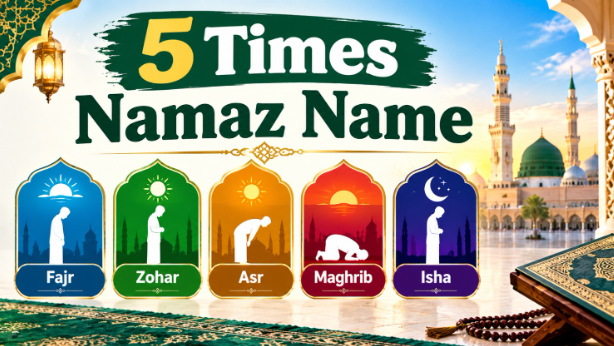
The five daily prayers are Fajr, Zuhr, Asr, Maghrib, and Isha. Each prayer has its own time and number of rakats. Learning their names in order makes it easier to understand the daily Salah routine.
For beginners, remembering five names may seem simple, but questions often arise about their prayer times, rakats, Farz, Sunnah, Witr, and Nafl prayers. A dedicated resource such as Namaz Rakat Guide can make these details easier to understand.
Fajr Namaz – The Morning Prayer
Fajr is the first of the five daily prayers. It is performed during the early morning before sunrise. Starting the day with Salah gives Muslims an opportunity to remember Allah at the beginning of a new day.
In the commonly followed Hanafi arrangement, Fajr consists of 2 Sunnah Muakkadah and 2 Farz rakats, making 4 rakats when both are counted together.
The two Farz rakats are obligatory, while the two Sunnah rakats are an important established Sunnah.
If you are learning the complete Fajr prayer arrangement, don’t simply memorise the name. It is also useful to understand how many rakats are performed and which ones are Farz and Sunnah.
This is where a dedicated Namaz Rakat Guide can be useful for beginners and anyone who wants to revise their daily prayer knowledge.
Zuhr Namaz – The Midday Prayer
Zuhr is the second of the five daily prayers and is performed after midday. It provides Muslims with an opportunity to pause during their daily activities and turn their attention toward worship.
In the commonly followed Hanafi arrangement, Zuhr can include 4 Sunnah, 4 Farz, 2 Sunnah, and 2 Nafl, making 12 rakats when these are counted together.
The 4 Farz rakats form the obligatory portion of Zuhr. The other rakats belong to Sunnah and Nafl prayers.
For someone searching for the 5-times namaz name, learning the name “Zuhr” is only the beginning. Understanding its rakat structure can make the daily Salah routine much clearer.
A good reference can help you compare Zuhr with the other four daily prayers without having to search for each prayer separately.
Asr Namaz – The Afternoon Prayer
Asr is the third of the five daily prayers and is performed in the afternoon. It comes after Zuhr and before Maghrib.
In the commonly followed Hanafi arrangement, Asr includes 4 Sunnah Ghair Muakkadah and 4 Farz rakats, making 8 rakats when both are counted together.
The 4 Farz rakats are the obligatory portion of Asr. The Sunnah prayer is separate from the Farz.
For new Muslims and beginners, learning the order of the five prayers can help create a consistent daily routine:
Fajr → Zuhr → Asr → Maghrib → Isha
Once these five names become familiar, you can gradually learn the rakat details and other important aspects of Salah.
Maghrib Namaz – The Evening Prayer
Maghrib is the fourth of the five daily prayers. It begins after sunset and has a shorter time window compared with some other daily prayers.
Maghrib consists of 3 Farz, 2 Sunnah, and 2 Nafl rakats in the commonly followed Hanafi arrangement, making 7 rakats when all are counted together.
The 3 Farz rakats are the obligatory portion of Maghrib, followed by Sunnah and Nafl prayers.
For beginners searching for the 5-time namaz name, Maghrib is easy to identify because it is connected with the period immediately following sunset. However, learning its exact rakat arrangement is equally important.
A clear rakat reference can help you quickly check the number of rakats associated with Maghrib whenever you need a reminder.
Isha Namaz – The Night Prayer
Isha is the fifth and final prayer of the five daily Salah. You perform it at night, and it completes the daily cycle of obligatory prayers.
In the commonly followed Hanafi arrangement, Isha includes 4 Sunnah Ghair Muakkadah, 4 Farz, 2 Sunnah, 2 Nafl, 3 Witr, and 2 Nafl, making 17 rakats when these are counted together.
The 4 Farz rakats are obligatory, while Witr is regarded as Wajib in Hanafi fiqh. The Sunnah and Nafl portions are also part of the broader Isha prayer routine.
Because Isha has several components, beginners may find its rakat arrangement confusing. Reviewing a clear guide can make it much easier to understand which prayers are performed and in what order.
Learn the 5 Times Namaz Name and Rakat Details With NamazRakatGuide.com
Knowing the 5 times namaz name is an important first step toward understanding the daily Salah routine. The five prayers—Fajr, Zuhr, Asr, Maghrib, and Isha—are spread throughout the day, giving Muslims regular opportunities to worship and remember Allah.
But learning only the names is not enough for someone who wants to understand Salah properly. It is also useful to learn the number of Farz and Sunnah rakats, the arrangement of Nafl prayers, and other related prayer information.
This is where Namaz Rakat Guide can be a useful online reference. The site focuses specifically on Namaz, rakats, and related Islamic prayer topics, making it easier for readers to find information without searching through unrelated resources.
If you are learning the five daily prayers, teaching someone else, or simply want to refresh your knowledge, take a moment to explore NamazRakatGuide.com.
You can review the prayer names, compare their rakat arrangements, and use the information as a convenient reference for your daily Salah routine. Bookmark the guide so that whenever you have a question about Namaz or rakats, the information is easy to find.
Conclusion
Knowing the 5 times namaz names—Fajr, Zuhr, Asr, Maghrib, and Isha—is an important first step in understanding the daily Salah routine. Each prayer has its own time and rakat arrangement, including Farz, Sunnah, Wajib, and Nafl prayers. Whether you are a beginner or looking to refresh your knowledge, Namaz Rakat Guide provides a simple reference for exploring daily Namaz and rakat information.