
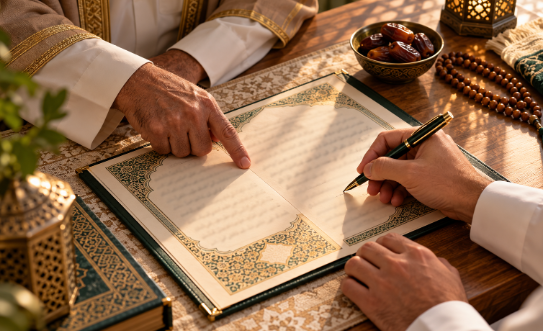
Nikkah is the Islamic marriage contract that becomes valid when eligible spouses freely agree through clear ijab and qabul, with the required wali and witnesses under the applicable school of Islamic law. As of October 2026, nikkah should also be distinguished from a state marriage, because religious validity and legal recognition are separate questions.
In short
- The five practical pillars are ijab and qabul, wali, two qualified witnesses, mahr and mutual consent; details vary by madhhab.
- Sunni practice normally requires two male witnesses, or one man and two women in the Hanafi school; Maliki, Shafi‘i and Hanbali rules are stricter about male witnesses.
- Mahr belongs to the bride and remains owed even when the contract does not state an amount; mahr al-mithl may apply.
- The most common errors are missing the wali where required, using unqualified witnesses, and confusing a nikkah-only ceremony with civil marriage.
- A nikkah alone is not a civil marriage in the UK and is not automatically a legal marriage in the USA; local registration and licensing rules apply.
What Is Nikkah in Islam?
Nikkah is the Islamic contract that makes a lawful marriage between two eligible people, rather than merely a wedding party or religious blessing. The contract creates rights and duties, including the bride’s right to mahr. The Qur’an describes spouses as a source of tranquillity, affection and mercy in Qur’an 30:21.
Nikkah, walimah and civil marriage are different events or legal categories. Nikkah is the religious contract; walimah is the meal or public celebration normally held after marriage; civil marriage is the state-recognised status created by local law. A couple may complete one, two or all three, so the ceremony should state which requirements are being fulfilled.
The Five Pillars of a Valid Nikkah
- Ijab and qabul. Ijab is the offer, and qabul is the acceptance that form the nikkah contract. The wording must identify the spouses and be understood as immediate acceptance in the same sitting. An imam may conduct the exchange, but an imam is not itself a universal pillar.
- Wali. The wali is the bride’s guardian in the contract. In the Maliki, Shafi‘i and Hanbali schools, a wali is generally required for validity; the Hanafi school gives a legally competent adult woman more contracting authority, subject to conditions. The hadith “There is no marriage without the permission of a guardian” is recorded in Sunan Abi Dawud 2085.
- Two witnesses. A nikkah must be witnessed according to the applicable school. Sunni schools require witnesses, although they differ over timing and gender; the Hanafi school accepts one male and two female witnesses, while the other three Sunni schools generally require two qualified men.
- Mahr. Mahr is the financial right given by the groom to the bride, not a payment to her parents or wali. Qur’an 4:4 commands believers to give women their dowries graciously. The amount may be paid immediately, deferred, or partly both.
- Mutual consent. A nikkah requires the free agreement of both spouses, and family pressure cannot replace the bride’s or groom’s consent. Sahih al-Bukhari 5136 states that a previously married woman must be consulted and a virgin’s permission must be sought.
Conditions Both Spouses Must Meet
- Age and sound mind: both people must meet Islamic capacity rules and the minimum legal age where they live; a state law cannot be ignored.
- No mahram relationship: marriage is prohibited between specified blood relatives, breastfeeding relatives and relatives prohibited by marriage.
- Religious compatibility: the couple must meet the relevant Islamic rules on Muslim and People of the Book marriages; ask a qualified scholar about a specific case.
- No existing impediment: the woman must not be married to another person or in iddah after divorce or widowhood.
- No coercion or deception: threats, concealed identity, fraud or pressure undermine the required consent and may also create civil or criminal consequences.
Who Can Be a Wali, and Can a Nikkah Be Valid Without One?
The usual wali order begins with the father, then a legally eligible paternal grandfather, adult son where applicable, brothers and other paternal male relatives, subject to madhhab rules. A wali cannot force a woman to marry, and a guardian who blocks a suitable marriage unjustly may require scholarly or judicial intervention. The Hanafi position allows a sane, adult woman to contract her own nikkah in qualifying circumstances, but the rule has conditions and should not be treated as a universal shortcut. If a wali is absent or abroad, the wali can appoint a proxy, and a recognised imam or Islamic authority may act where the lawful wali is unavailable or persistently obstructive. Some Muslim matchmaking platforms let a guardian oversee the conversation; NikahPlus describes manual profile and message moderation, a wali-contact process and a School of Nikah.
Witness Requirements: How Many and Who Qualifies?
The following table summarises mainstream Sunni positions; local scholars may apply qualifications differently, especially concerning witness integrity, hearing the wording and the Maliki timing rule.
| Madhhab | Minimum witnesses | Are female witnesses accepted | Notes |
| Hanafi | Two men, or one man and two women | Yes, in the one-man/two-women combination | Witnesses hear the ijab and qabul; an adult woman’s wali position differs from the other Sunni schools. |
| Maliki | Two qualified witnesses | Generally no as substitutes for two men | Witnesses may be required by the time of consummation rather than necessarily at the contract, according to the cited school summary. |
| Shafi‘i | Two qualified Muslim men | No | Witnesses are present at the contract and must hear and understand it. |
| Hanbali | Two qualified Muslim men | No | Witnesses are required at the contract; qualifications and publicity rules should be checked with a Hanbali scholar. |
A nikkah is not valid with three female witnesses under the Hanafi combination or the other three Sunni schools. The Hanafi rule is one male plus two female witnesses, not three women; Shafi‘i, Maliki and Hanbali positions generally require two men.
Mahr: Rules, Minimum Amount and Deferred Payment
Mahr belongs to the bride alone, and her family cannot demand or receive it as their property. Qur’an 4:4 establishes the bride’s entitlement, while classical schools differ on minimum amounts; for example, the Hanafi school traditionally specifies ten dirhams, whereas other schools use different formulations. There is no reliable UK- or US-wide diaspora benchmark for a “typical” mahr, so couples should not copy an invented range.
Prompt mahr, or mu‘ajjal, is payable at once; deferred mahr, or mu’wajjal, becomes due at an agreed date or on divorce or death. A nikkah remains valid when the amount was not named, but the bride is still owed mahr al-mithl, an amount assessed by reference to comparable women and circumstances. Write the amount, currency, payment date and conditions in the contract.
Ijab and Qabul: How the Offer and Acceptance Are Made
Ijab and qabul should be clear, understood by the parties and witnesses, and completed in one sitting. The exchange may use any language that accurately expresses the offer and acceptance, and it should occur before the wali where the chosen school requires one and before the witnesses. A written contract and signatures are strong evidence, even where a particular school does not make writing a validity condition.
A video-call nikkah is disputed and fact-sensitive rather than automatically valid or invalid. Questions include identity, uninterrupted connection, whether everyone hears the wording, whether the witnesses are physically or virtually present under the scholar’s school, and whether local law permits the ceremony. Do not rely on a generic app call; obtain a ruling from a qualified local scholar and complete civil formalities separately.
Nikkah vs Civil Marriage in the UK and USA
A nikkah-only ceremony is not the same as a civil marriage, and the legal answer depends on the jurisdiction. In England and Wales, a religious ceremony requires an authorised person and a marriage schedule or document at a registered religious building; the government also requires notice and registration steps.
| Aspect | Nikkah only | Civil marriage |
| Legal recognition | Usually religiously meaningful but not automatically recognised as a marriage by UK law; in the USA, recognition depends on state licensing and solemnisation rules. | Created and recorded under the applicable UK or US jurisdiction’s statutory process. |
| Rights on divorce | May require a religious divorce and separate civil claims; no automatic family-court marriage remedies where no civil marriage exists. | Normally allows the spouses to use the jurisdiction’s divorce and financial-remedy process. |
| Inheritance | Mahr or Islamic expectations do not automatically replace wills, beneficiary designations or intestacy law. | Spousal status may affect inheritance, but wills and local succession rules still matter. |
| Extra step required | Complete the legally required marriage ceremony and registration; in the USA, obtain the state or county licence and certificate process. | Follow the local notice, licence, officiant, witness and registration requirements. |
The 2017 Channel 4 survey of 923 Muslim women in 14 British cities found that 61% had only a nikkah and no separate civil ceremony, while 99% had had a nikkah. The result describes that sample, not every British Muslim marriage, but it shows why couples should verify civil status. In the USA, marriage-licence requirements vary by state, and USAGov distinguishes a licence that permits marriage from a certificate that proves it occurred.
9 Common Mistakes That Can Invalidate a Nikkah
- No wali where the chosen school requires one — consequence: the nikkah may be invalid; fix: use the lawful wali, proxy or recognised authority.
- Only one witness — consequence: the witness condition is unmet; fix: arrange the required number before ijab and qabul.
- Only female witnesses — consequence: three women do not satisfy the Sunni combinations above; fix: follow the applicable school’s witness rule.
- Secret nikkah — consequence: secrecy creates disputes over proof, rights and publicity; fix: announce it, document it and register it civilly.
- Nikkah during iddah — consequence: the marriage cannot proceed while the woman is in the relevant waiting period; fix: verify the end date with a scholar.
- Mahr paid to the family — consequence: the bride’s personal right is diverted; fix: pay or record mahr in the bride’s name.
- Coercion — consequence: there is no genuine mutual consent; fix: stop the ceremony and provide a private, safe consent check.
- Temporary or conditional nikkah — consequence: mut‘ah is rejected by Sunni jurisprudence, while misyar is disputed and cannot be used to hide a time limit or abuse rights; fix: seek case-specific scholarship. NikahPlus explains misyar marriage.
- Unverified faith or identity — consequence: an eligibility or safeguarding problem may invalidate or endanger the marriage; fix: verify identity, religion, marital status and legal capacity before the contract.
Nikkah Ceremony Step by Step
- Ta’aruf and istikhara: get to know each other through family or a moderated platform, and make istikhara without treating a dream as the only answer.
- Family consent: involve the wali and both families early, while remembering that family approval cannot replace the spouses’ consent.
- Agree the mahr: record prompt and deferred amounts, currency, dates and any lawful conditions.
- Appoint the wali and witnesses: confirm their eligibility, availability and ability to hear the contract.
- Khutbah: an imam or speaker may give a marriage sermon; the khutbah is not a substitute for ijab and qabul.
- Ijab and qabul: make the offer and acceptance clearly in the same sitting.
- Sign, document and make dua: sign the nikkah document, give copies to the couple, make dua and complete the civil registration. A Muslim nikkah platform NikahPlus, also presents a practical sequence involving consent, mahr, witnesses and walimah.
Pre-Nikkah Checklist
- Confirm both parties’ identity, age and marital status.
- Confirm that neither spouse is in iddah or a prohibited relationship.
- Confirm religious eligibility and obtain qualified advice for an interfaith case.
- Record the bride’s free consent privately.
- Identify the wali or authorised proxy.
- Select the required witnesses for the chosen madhhab.
- Agree on prompt and deferred mahr in writing.
- Draft clear ijab and qabul wording.
- Prepare the contract, copies and translation if needed.
- Book the civil licence, ceremony and registration required locally.
FAQ’s
Is nikkah valid without a wali?
A nikkah without a wali is generally invalid in the Maliki, Shafi‘i and Hanbali schools, while the Hanafi school recognises a qualified adult woman’s ability to contract her own marriage in defined circumstances. If the wali is absent or obstructive, ask a qualified local scholar or recognised Islamic authority to appoint a proxy rather than improvising.
Can a nikkah be done online?
An online nikkah may be accepted by some scholars under strict identity, hearing, agency and witness conditions, but video calls are disputed, and local civil law may not recognise them. Use a qualified imam, confirm the applicable madhhab, protect private consent, document the contract and complete the required in-person or statutory registration.
Is mahr required if it was not mentioned in the contract?
Mahr remains owed even when the contract does not state an amount. The nikkah can be valid, but the bride is entitled to mahr al-mithl, assessed using comparable family and social circumstances. The couple should write the amount, timing and payment method afterwards and ask a scholar to resolve disagreement.
Is nikkah legally recognised in the UK?
A nikkah alone is usually not legally recognised as a marriage in England and Wales when statutory ceremony and registration requirements are absent. A couple should complete the civil process at a register office or authorised religious venue and obtain proof of registration. Scotland and Northern Ireland have different rules, so check the local authority.
Can a nikkah be done without the parents’ knowledge?
A nikkah should not be hidden as a way to bypass consent, wali rules, safeguarding or legal duties. The answer depends on the madhhab, the wali’s conduct and the couple’s circumstances; Hanafi doctrine differs on an adult woman’s contracting authority. Obtain confidential advice from a qualified scholar and ensure civil protection before proceeding.
What is the difference between nikkah and walimah?
Nikkah is the Islamic marriage contract that creates the marital relationship when its conditions are met. Walimah is the meal or public celebration held after marriage to announce and celebrate it. A walimah cannot replace ijab and qabul, a wali where required, witnesses, consent or the bride’s mahr.