
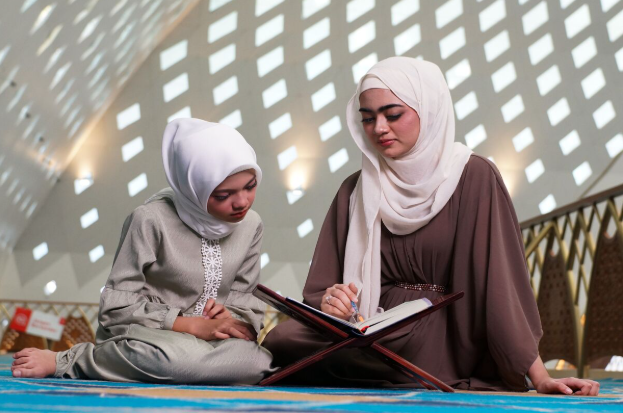
A child might happily listen to the same story ten times, spend ages looking for hidden objects in a picture book or turn an ordinary car journey into a game. Yet when it is time to practise the Quran, that same child may suddenly find a hundred other things to do.
Many parents know the feeling. They want their children to grow up reading the Quran, understanding its message and feeling close to it. But keeping young learners interested can take a little thought, especially when school, homework and play already fill much of their day.
The answer is not to turn every Quran lesson into a game. Children still need proper guidance, regular practice and patience. However, a few creative activities can make learning more enjoyable and help them connect what they read with the world around them.
Here are seven ideas parents can try at home.
1. Turn Quranic Stories into Storytelling Sessions
Children often remember stories long after they have forgotten a lesson. The stories in the Quran offer parents a wonderful way to introduce important Islamic values while helping children become familiar with its message.
Instead of simply telling your child to read a passage, choose a story and explore it together. You could start with the story of Prophet Yusuf (AS), Prophet Musa (AS), Prophet Ibrahim (AS) or the people of the cave. Learn 25 prophets’ stories mentioned in the Quran now!
Read an age-appropriate account of the story, then ask your child questions such as:
- What do you think Yusuf (AS) felt when his brothers left him?
- Why did Prophet Ibrahim (AS) refuse to worship idols?
- What can we learn from Prophet Musa’s (AS) courage?
- Which part of the story surprised you most?
You could also ask your child to draw a scene from the story or arrange a few illustrated cards in the order the events happened. For younger children, simple pictures can help them follow the story. Older children may enjoy finding the relevant passage in the Quran with your help.
The aim is to make the story a starting point for learning, not to replace reading the Quran itself. You can explain that the Quran mentions these events and then help your child discover where they appear.
Surah Yusuf is a particularly useful place to begin. Allah describes it as the best of stories in Surah Yusuf (12:3). Its themes of patience, forgiveness and trust in Allah can lead to conversations that children understand and remember.
2. Play an Arabic Letter Treasure Hunt
For children who are beginning to recognise Arabic letters, learning from a page for too long can become tiring. A simple treasure hunt can give them a reason to look closely at the letters they are learning.
Start with a few letters your child already knows. Write each one on a separate card and hide the cards around a room. Ask your child to find them and identify each letter when they bring it back.
Once they become comfortable, make the activity a little more challenging:
- Ask them to find two cards with the same letter.
- Place several letters together and ask them to identify a particular one. Arabic workbooks are the best option to help them learn faster!
- Use a letter card as a starting point for practising its sound with a teacher-approved resource.
- Let your child arrange the cards in the order they have been learning.
You can also make a small Arabic letter wall. Add new letters as your child learns them and keep older ones visible for revision.
For children who enjoy drawing, try asking them to decorate a letter card or make a simple collage around it. Just make sure the activity does not distract from recognising the correct letter shape.
Remember that Arabic letters can change shape depending on their position in a word. A treasure hunt is useful for recognition, but children will still need structured practice to learn how letters connect and how to read them correctly.
3. Make a ‘Verse of the Day’ Family Activity
A short verse can give the whole family something meaningful to discuss. Rather than expecting children to understand long passages straight away, choose a short verse or a simple Quranic teaching and explore its meaning together.
For example, you could introduce the verse:
“Surely in the remembrance of Allah do hearts find comfort.”
Surah Ar-Ra’d (13:28)
Read the verse together using a reliable translation, then explain its meaning in words your child can understand. You might talk about remembering Allah through salah, dua and dhikr, and how turning to Him can bring comfort during difficult moments.
To make the activity more interactive, write the verse on a small card and place it somewhere visible. Ask your child to share one thing they remember about its meaning later in the day.
You could also give them a small notebook in which to write or draw something they learned from each verse. Younger children can draw pictures, while older children may prefer writing a sentence about the lesson.
Keep the discussion open. If your child asks a question you cannot answer confidently, look for an explanation from a reliable scholar or teacher rather than guessing.
4. Use Audio Recitation for a Listen-and-Follow Activity
Children do not always have to be holding a book to engage with Quran learning. Listening to clear recitation can help them become familiar with the sound and rhythm of the Quran.
Choose a short surah your child is learning and play a recording by a reliable reciter. Let them listen once without interruption. Then play it again while they follow the words in their Qaida or Mushaf, depending on their reading level.
You can make this a simple activity:
- Play one short verse.
- Pause the recording.
- Let your child repeat what they heard.
- Play it again and follow along together.
- Leave time to practise any part they find difficult.
For younger children who are not reading Arabic yet, listening can help them become familiar with short surahs they will learn later.
Try not to turn every listening session into a test. Sometimes it is enough to sit together and listen. You could make it part of a quiet evening routine or listen to a short surah before bedtime.
When working on pronunciation and Tajweed, use recordings as support rather than as a substitute for a qualified teacher. A child may hear a sound without knowing exactly how to produce it, so proper feedback remains important.
Related:Islamic Homeschool Resources and Ideas
5. Connect Quranic Lessons with Everyday Life
Children understand ideas more easily when they can see how those ideas apply to their own experiences. This is also a useful way to help them appreciate that the Quran is guidance for life, rather than something they only open during lessons.
For instance, if your child is learning about honesty, talk about what honesty looks like when they make a mistake. If you are discussing kindness, ask how they could help a sibling or a friend.
You can use everyday situations as opportunities to revisit Quranic values:
- Gratitude: Talk about the things Allah has blessed your family with, from food and shelter to good health and friendship.
- Kindness: Encourage your child to help someone at home or share with another child.
- Patience: Discuss what to do when something takes longer than expected.
- Honesty: Explain why telling the truth matters, even when admitting a mistake feels difficult.
- Forgiveness: Talk about how to respond when someone apologises.
Choose a Quranic passage relevant to the value you are discussing and explain it using an age-appropriate translation. Avoid presenting your own interpretation as a religious ruling. For detailed questions, seek guidance from someone qualified.
The important part is helping children see a connection between what they learn and how they treat people. A lesson about kindness becomes easier to remember when they have an opportunity to practise it.
6. Start a Family Quran Circle
Children often take an interest in activities they see their parents doing. If they only see the Quran brought out when it is time for their lesson, they may begin to associate it with a task rather than a familiar part of family life.
A family Quran circle can help change that.
Choose one day of the week when everyone can sit together for a short session. It does not need to be long or formal. Even fifteen minutes can give the family an opportunity to read, listen and learn together.
You could structure the time in a simple way:
- Begin with a short recitation by a parent or an older child.
- Let younger children listen or recite a short surah they know.
- Read a simple explanation of a verse.
- Discuss one lesson everyone can take away.
- Finish with a short dua.
Give children a small role so they feel involved. One child might choose the surah, another could find the page, and someone else could share what they remember from the previous session.
Parents should join in rather than treating the gathering as another class to supervise. When children see adults learning, revising and making time for the Quran, they receive a powerful example.
The Prophet Muhammad (PBUH) said,
“The best among you are those who learn the Quran and teach it.”
(Sahih al-Bukhari 5027).
A family learning together is one way to put that spirit into practice.This Ramadan, create the Quran Circle and start teaching and learning together to get double rewards!
7. Create a Quran Learning Progress Board
Children enjoy seeing their efforts add up. A simple progress board can help them recognise what they have learnt and give them something to look forward to.
You do not need an elaborate chart. A sheet of paper, a notebook or a small whiteboard will do.
Divide it into a few sections based on your child’s current learning goals. For example:
| Learning goal | Progress |
| Recognising five new Arabic letters | Complete |
| Revising Surah Al-Fatihah | In progress |
| Learning the meaning of a short surah | Not started |
| Practising with the teacher | In progress |
Let your child add a sticker, tick or small drawing whenever they complete a task. You can also ask them to choose a goal for the coming week.
The key is to celebrate effort and consistency, not speed. Avoid comparing siblings or making one child feel that they are falling behind. Every child learns at a different pace, and a progress board should encourage them rather than create pressure.
You might celebrate a milestone with a family treat, a new Islamic storybook or a little extra time doing an activity they enjoy. The reward does not need to be expensive. A parent’s appreciation can mean a great deal.
A Few Things to Keep in Mind When Teaching Children the Quran
Creative activities can make Quran learning more enjoyable, but they work best when supported by a sensible approach.
Keep sessions short, interactive and manageable by using board games, story books and awards like Islamic badges and halal candies. A young child may concentrate better for a few minutes than for a long lesson. Adjust the length according to their age, energy and learning needs.
Quick Bonus: Explore these limited-time flash sales at Riwaya to get your Islamic essentials at your doorstep and start integrating Quran into your routines!
Do not rush through the lessons. Recognising letters, joining them correctly, reading words and learning Tajweed all take time. Moving ahead before a child understands the basics can create difficulties later.
Be careful with pronunciation. Parents can encourage practice and listen to their children, but they should not try to correct sounds or Tajweed rules they do not understand. A qualified Quran teacher can identify mistakes and demonstrate the correct pronunciation.
Make room for questions. Children may ask why a surah was revealed, what a word means or how a particular teaching applies to their lives. Welcome these questions, even when you need to find the answer together.
Avoid using Quran lessons as punishment. If a child is tired, upset or struggling to concentrate, forcing them to continue may make learning feel like a burden. A short break and a fresh start can be more helpful.
When Should Parents Seek Help from a Quran Teacher?
Home activities can support a child’s learning, but they do not have to replace formal Quran lessons. In fact, the two can work well together.
A qualified teacher can guide children through Arabic pronunciation, letter connections, reading fluency and Tajweed. They can also identify mistakes that parents may not notice, especially when a child is just beginning to read.
Parents can then use the activities at home to revise what has been covered in class. If a teacher introduces a new set of letters, for example, you can use the treasure hunt to help your child recognise them. If the child is learning a short surah, listening together can support revision.
For families who need more flexibility, online Quran classes can provide access to structured lessons from home. Look for a programme that offers individual attention, age-appropriate teaching and opportunities for children to practise aloud and receive feedback.
Quran Learn Academy offers online Quran learning for children, including lessons with individual guidance. This can be a useful option for parents who want their child to receive structured instruction while continuing to practise at home.
Help Your Child Build a Lifelong Connection with the Quran
Teaching children the Quran is a gradual process. Some days they will be eager to learn, while on others they may struggle to sit still or remember what they practised. That is part of learning.
The goal is to give children a positive start, help them build good habits and show them that the Quran has a place in everyday family life. Stories, listening activities, family discussions and small learning challenges can all make that experience more engaging.
Allah instructs the Prophet (PBUH) to invite people to His way with wisdom and kind advice (Surah An-Nahl 16:125). That reminder is worth keeping in mind when teaching children, too. Patience, kindness and an approach suited to the learner can make a real difference.
You do not need to make every lesson exciting or perfect. Sometimes the most meaningful moment is simply sitting beside your child, opening the Quran and learning a little together. Explore more Islamic toy inspirations for your kids at Riwaya to help your children learn and remember what they explore!