
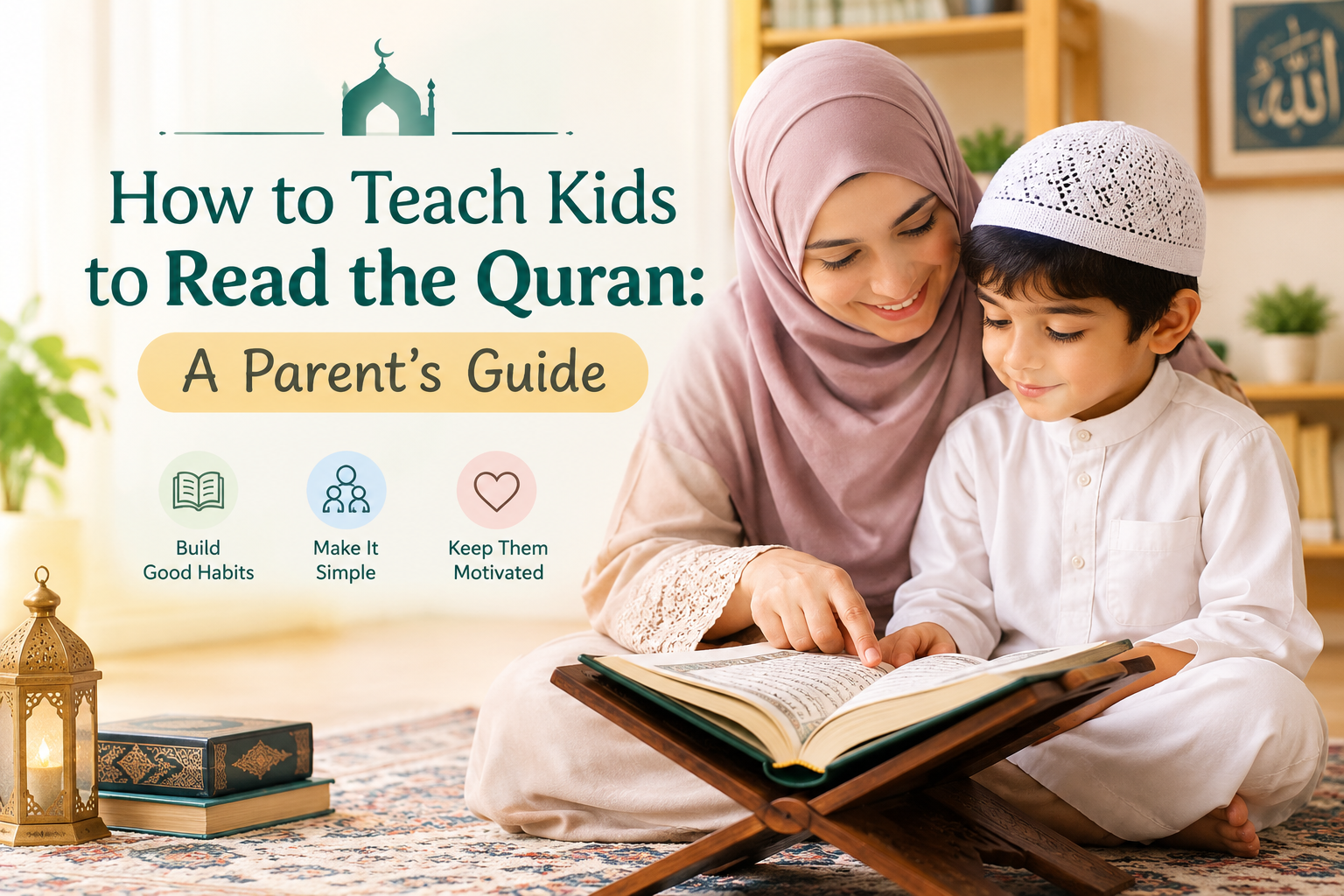
Teaching a child to read the Quran is a meaningful journey, but many parents are unsure where to begin. Some children struggle to recognise Arabic letters, while others can read simple combinations but find pronunciation difficult. It is also common for young learners to lose concentration when lessons feel too long or challenging.
The key is to build Quran reading skills gradually. Children need a clear starting point, regular practice, patient correction, and encouragement when they make progress. Whether you are helping your child at home or arranging lessons with a teacher, a structured approach can make learning easier to manage. Here are six practical ways to help your child develop stronger Quran reading skills.
1. Start by Understanding Your Child’s Learning Level
Before choosing a book, lesson plan, or teaching method, find out what your child already knows. Children learn at different speeds, and their starting points can vary depending on previous lessons, language background, and familiarity with Arabic.
Begin with a few simple activities. Ask your child to identify familiar Arabic letters, recognise their sounds, and read basic combinations if they have learned them before. Notice whether they can distinguish similar-looking letters and recognise short vowel marks.
This simple assessment helps you identify what needs attention.
For example, a child who recognises individual letters but struggles to join them may need more practice with connected letters. Another child may read words slowly but need help distinguishing between similar Arabic sounds.
Set small, realistic goals based on these observations. One child might work on recognising unfamiliar letters, while another practises reading short combinations more accurately.
Avoid comparing your child with siblings or other students. Progress is easier to maintain when lessons match the child’s current ability. If you are unsure about the right starting point, a qualified Quran teacher can assess existing skills and suggest suitable next steps.
2. Introduce Noorani Qaida as a Foundation for Quran Reading
For many beginners, Noorani Qaida provides a structured introduction to the skills needed for Quran reading. Instead of asking children to begin with longer Quranic passages, it introduces Arabic letters, their sounds, and reading rules in manageable stages.
A typical learning sequence may include:
- Arabic letters: Children learn to recognise individual letters and connect each letter with its correct sound.
- Harakat: Fatha, Kasra, and Damma help children understand how vowel marks affect pronunciation.
- Connected letters: Learners practise recognising letters in different positions and combining them to read simple forms.
- Tanween and Sukoon: These concepts introduce additional pronunciation patterns that children need to understand as they progress.
- Shaddah and Madd: Children gradually learn to recognise doubled consonant sounds and lengthened vowel sounds.
The order and pace may vary according to the teaching method and the child’s existing knowledge. The important thing is to make sure a child understands a skill before moving too quickly to the next one.
Parents can support this process by reviewing previous lessons and asking their child to read examples aloud. If a child repeatedly struggles with a particular rule, revisit it rather than treating every mistake as a sign of poor progress.
A structured Noorani Qaida course for beginners and children can provide guided lessons for families who want help establishing these foundations. Teacher feedback can also help identify pronunciation mistakes that may be difficult for a parent to recognize independently.
3. Help Children Develop Correct Quran Pronunciation
Recognising Arabic letters is only one part of learning to read the Quran. Children also need to pronounce them correctly. Some Arabic letters have similar sounds, which can be challenging for children who do not hear or speak Arabic in everyday life.
The best way to address this difficulty is to combine careful listening with regular reading practice.
Try these approaches:
- Let your child listen first. Model the sound or use a reliable recitation recording before asking the child to repeat it.
- Practise difficult letters separately. If your child confuses two sounds, work on them individually before practising them in words.
- Encourage slow, clear reading. Accuracy matters more than speed when a child is learning a new sound or rule.
- Correct mistakes gently. Demonstrate the correct pronunciation, allow the child to try again, and revisit the sound during later practice.
- Introduce Makharij gradually. Makharij refers to the articulation points from which Arabic letters are produced. Understanding these points can help children develop more accurate pronunciation.
- Build Tajweed knowledge step by step. Introduce relevant rules when the child is ready to apply them, rather than overwhelming a beginner with too many technical terms.
Listening to recordings can help children become familiar with correct recitation, but recordings cannot tell them whether they are making a particular mistake. When a pronunciation problem continues, individual feedback from a knowledgeable Quran teacher can be especially useful.
The aim is not to make children sound perfect immediately. It is to help them develop accurate habits through instruction, repetition, and patience.
4. Build an Effective Quran Reading Routine at Home
Regular practice helps children remember what they learn. However, finding time for Quran reading can be difficult when children already have schoolwork, homework, and other activities. Long or unpredictable sessions may also leave them tired and frustrated.
A simple routine is often easier to maintain than an ambitious schedule that the family cannot follow consistently.
Follow a Simple, Consistent Practice Routine
Choose a time when your child is reasonably alert and can concentrate. Depending on their age and attention span, a short daily session may be more manageable than an occasional long session.
A practice session could include:
- Review previous learning: Spend a few minutes revisiting letters, sounds, or rules covered in earlier lessons.
- Practise one current skill: Focus on the concept your child is learning instead of introducing several new topics at once.
- Read aloud: Let your child practise while you listen, noting any sounds or combinations that need more attention.
- Finish with a familiar exercise: End with something the child can complete confidently to reinforce learning and build motivation.
Adjust the duration to suit your child’s needs. A younger beginner may need a shorter session, while an older child may be comfortable practising for longer.
Make Learning Positive and Distraction-Free
Create a comfortable place where your child can read without unnecessary interruptions. Keep the learning materials ready, put away distracting devices, and allow questions when something is unclear.
Praise specific efforts rather than offering only general approval. For example, tell your child that they remembered a difficult vowel mark or corrected a sound after practising it. This helps them understand what they are doing well.
If your child becomes tired or frustrated, take a short break and return to the lesson later. Avoid turning every practice session into a test.
Parents do not need to know every Tajweed rule to provide encouragement. Listening, helping children follow their routine, and communicating difficulties to their teacher are all valuable ways to support Quran reading practice at home.
5. Choose the Right Quran Teaching Method for Your Child
Some parents teach their children at home, while others prefer a local Quran class or online lessons. The right option depends on the child’s learning needs, the family’s schedule, and the level of guidance available.
Whatever method you choose, look beyond how quickly lessons are completed. A child may move through pages rapidly without developing accurate pronunciation or a clear understanding of the material.
Look for Individual Attention and Useful Feedback
A suitable Quran teacher should understand the learning needs of children and be able to explain concepts in an age-appropriate way.
When considering a teacher or class, look for these qualities:
- Relevant teaching knowledge: The instructor should have a sound understanding of Quran reading and the rules they teach.
- Opportunities to read aloud: Children need time to practise rather than simply listen to explanations.
- Clear correction: When a child makes a mistake, the teacher should demonstrate the correct sound and allow the child to try again.
- Lessons suited to the child’s level: Beginners need different guidance from children who are already reading Quranic passages.
- Regular revision: Revisiting earlier lessons helps identify gaps before new material is introduced.
- Understandable progress updates: Parents should have a general idea of what their child has learned and which skills need more practice.
A patient teaching approach can make a difference, particularly for children who feel shy about making mistakes. Ask how the instructor handles repeated errors and supports students who need additional practice.
Consider Whether Online Quran Classes Suit Your Family
Online learning may be a practical choice for families who have limited access to suitable local classes or need more flexible scheduling. Children can learn from home, and parents can often observe how lessons are delivered.
Before enrolling, check whether the format gives your child enough opportunity to read aloud, receive individual correction, and ask questions. Also consider the instructor’s experience, lesson duration, available timings, and how progress is communicated to parents.
For families exploring this option, online Quran classes for kids offer a way to investigate structured learning without travelling to a physical classroom. If a provider offers a trial lesson, use it to see whether your child feels comfortable with the teacher and whether the teaching style suits their needs.
Online classes are not automatically the best choice for every child. What matters most is whether the learning arrangement provides suitable instruction, meaningful practice, and consistent support.
6. Common Mistakes Parents Should Avoid
Even well-intentioned parents can make learning more difficult by expecting too much too soon or overlooking small problems. A few adjustments can help children develop stronger Quran reading habits.
- Rushing through lessons: Completing more pages is not necessarily better if the child has not understood the material. Spend extra time on difficult concepts before moving forward.
- Ignoring pronunciation difficulties: Repeated mistakes deserve attention. Identify the sound or rule causing difficulty and seek suitable guidance if the problem continues.
- Practising only occasionally: Long gaps between sessions can make it harder for children to remember previous lessons. A manageable, consistent routine is usually more practical.
- Comparing children: Differences in age, prior learning, confidence, and language exposure affect progress. Focus on your child’s own development.
- Expecting immediate fluency: Learning to read the Quran accurately takes time. Encourage steady improvement instead of putting pressure on children to achieve a particular speed.
When children make mistakes, treat them as information about what they need to practise next. Patient correction and clear goals are more useful than criticism or pressure.
Conclusion
Learning to read the Quran is a gradual process. Start by identifying your child’s current level, use a structured foundation such as Noorani Qaida, and give pronunciation the attention it deserves. Regular practice, patient correction, and a positive home environment can help children build confidence over time.
If you are unsure how to guide the next stage, consider seeking advice from a qualified Quran teacher. With a suitable learning approach and consistent support, children can strengthen their reading skills and develop a lasting connection with Quran learning