
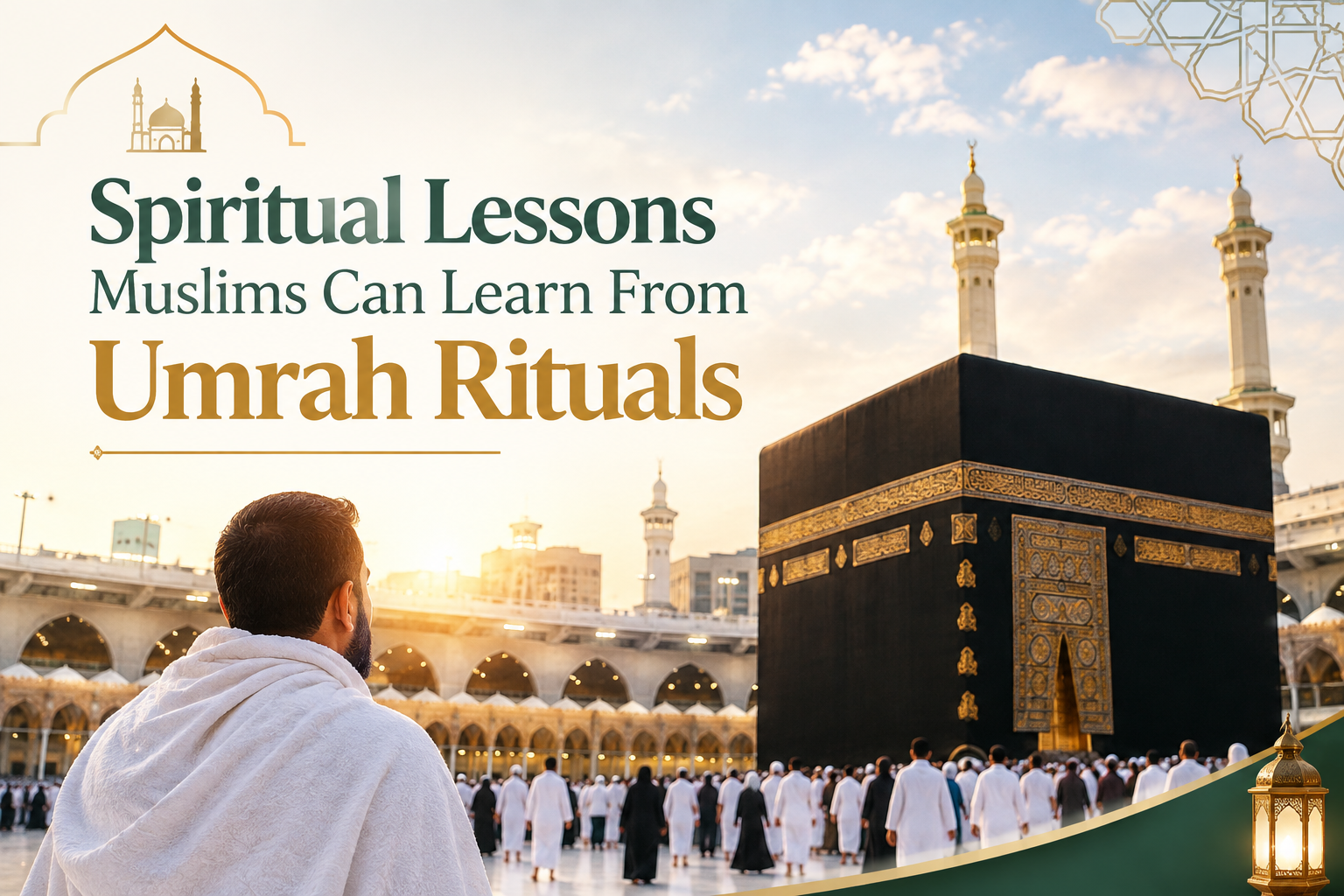
Umrah is a deeply meaningful act of worship that lets Muslims step away from daily routines and focus on prayer, reflection, repentance, and remembrance of Allah. For UK pilgrims, the journey to Makkah and Madinah can be both a physical and spiritual experience, offering valuable lessons that can continue long after returning home. Every part of Umrah, from entering Ihram to completing Tawaf and Sa’i, reminds us of faith, patience, humility, and devotion.
1. The Lesson of Sincere Intention
Every act of worship begins with intention. Before performing Umrah, pilgrims make a sincere intention to worship Allah and undertake the journey for His sake. This teaches Muslims that their actions should have a clear and sincere purpose.
The lesson of intention can also be applied to everyday life. Whether someone is working, studying, supporting their family, or helping others, having a sincere purpose can give ordinary activities greater meaning. Umrah reminds believers to regularly examine their intentions and ensure that their actions are guided by faith rather than recognition or material benefit.
2. Humility Through Ihram
Ihram is one of the most recognisable aspects of Umrah. Pilgrims enter a state of consecration and follow specific rules while performing their worship. For men, Ihram involves wearing simple, unstitched garments, while women observe the appropriate requirements of modest Islamic dress.
This simplicity offers an important lesson in humility. People may come from different countries, cultures, professions, and financial backgrounds, but during Umrah, worldly distinctions become less important. The experience reminds Muslims that their true worth is not determined by wealth, status, appearance, or social position.
3. Patience During the Journey
Umrah requires physical effort and patience. Pilgrims may experience long journeys, crowded areas, waiting periods, tiredness, and changes in their normal routines. These experiences can test a person’s patience.
Rather than viewing these difficulties only as obstacles, Muslims can see them as opportunities to practice Sabr. Patience learned during Umrah can be carried into everyday situations, including family responsibilities, work challenges, financial difficulties, and personal struggles.
The journey also teaches that meaningful goals often require effort. A pilgrim’s willingness to continue despite tiredness can become a reminder to remain patient when facing difficulties in other areas of life.
4. The Importance of Equality
Umrah brings Muslims from many parts of the world together. Pilgrims may speak different languages and come from different cultures, but they gather for the same purpose: worshipping Allah.
For someone arranging an Umrah journey through an Umrah Package from the UK, this international gathering can provide a powerful reminder of the unity of the Muslim Ummah. Seeing people from different backgrounds performing the same acts of worship demonstrates that faith can connect people beyond nationality, culture, language, and social status.
This lesson of equality encourages Muslims to treat others with respect and avoid judging people based on their background or financial position.
5. Tawaf Teaches Devotion
Tawaf involves circling the Kaaba seven times. It is a central ritual of Umrah and represents an important expression of devotion and obedience to Allah.
Moving around the Kaaba with other pilgrims can encourage believers to reflect on their relationship with Allah. The ritual creates a powerful atmosphere of worship and remembrance.
Tawaf can also remind Muslims about consistency. Pilgrims complete each round with dedication, even when they feel tired. Similarly, faith requires continuous effort rather than occasional commitment. Regular prayer, remembrance, good character, charity, and helping others are practices that can strengthen a Muslim’s relationship with Allah over time.
6. Sa’i Teaches Trust and Perseverance
Sa’i between Safa and Marwah commemorates the efforts of Hajar (peace be upon her) as she searched for water for her son Ismail (peace be upon him). Her story is associated with determination, trust in Allah, and perseverance during a difficult situation.
Performing Sa’i allows Muslims to reflect on the importance of taking action while placing trust in Allah. Faith does not mean remaining passive. A believer can make sincere efforts while trusting Allah with the outcome.
This lesson can be especially meaningful when Muslims face uncertainty in their personal or professional lives. Sa’i reminds them to keep moving forward, make responsible efforts, and maintain hope.
7. Gratitude for Allah’s Blessings
Umrah provides an opportunity to appreciate blessings that are often overlooked in everyday life. Pilgrims may become more aware of the value of health, family, safety, food, water, shelter, and the ability to worship.
The experience can encourage Muslims to develop an attitude of Shukr. Gratitude should not be limited to moments when life is easy. Muslims can practice gratitude by recognising blessings, using them responsibly, and expressing appreciation to Allah.
Returning home after Umrah can therefore be an opportunity to develop more grateful habits and become less focused on material possessions.
8. Repentance and Self-Reflection
Umrah can also encourage Muslims to reflect on their actions and seek forgiveness from Allah. Away from their normal routines, pilgrims may have more time to think about their behaviour, relationships, responsibilities, and spiritual goals.
This self-reflection can lead to positive changes. A person may decide to improve their prayers, strengthen family relationships, give more charity, avoid harmful habits, or become more mindful of their words and actions.
Platforms such as Hajj Umrah Hub help pilgrims with practical aspects of planning their journey by providing Umrah services, but the deeper value of Umrah comes from the spiritual transformation that pilgrims seek through worship and reflection.
9. The Value of Simplicity
Modern life can sometimes become centred around possessions, schedules, entertainment, and constant digital activity. Umrah offers a temporary opportunity to step away from many of these distractions.
Pilgrims spend their time focused on worship, movement, prayer, remembrance, and reflection. This simpler environment can remind Muslims that happiness does not always depend on having more things.
The lesson of simplicity can continue after returning home. Muslims can reduce unnecessary distractions, make more time for worship and family, and focus on the things that bring genuine value to their lives.
10. Carrying the Lessons Home
Perhaps one of the most important lessons of Umrah is that its benefits should not end when the pilgrimage ends. The real challenge is to carry the positive habits and spiritual awareness developed during the journey into everyday life.
A pilgrim can continue practising patience, gratitude, humility, kindness, sincerity, and remembrance of Allah. The experience can become a turning point that encourages a stronger and more meaningful relationship with faith.
Conclusion
Umrah is more than a physical journey to the sacred places. Its rituals provide Muslims with opportunities to reflect on important values such as sincerity, humility, patience, equality, perseverance, gratitude, repentance, and simplicity.
From the intention behind the journey to the completion of Tawaf, Sa’i, and the other acts of worship, every stage can encourage personal reflection. By carrying these lessons into daily life, Muslims can allow the spiritual experience of Umrah to influence their character, relationships, and commitment to worship long after they return home.